

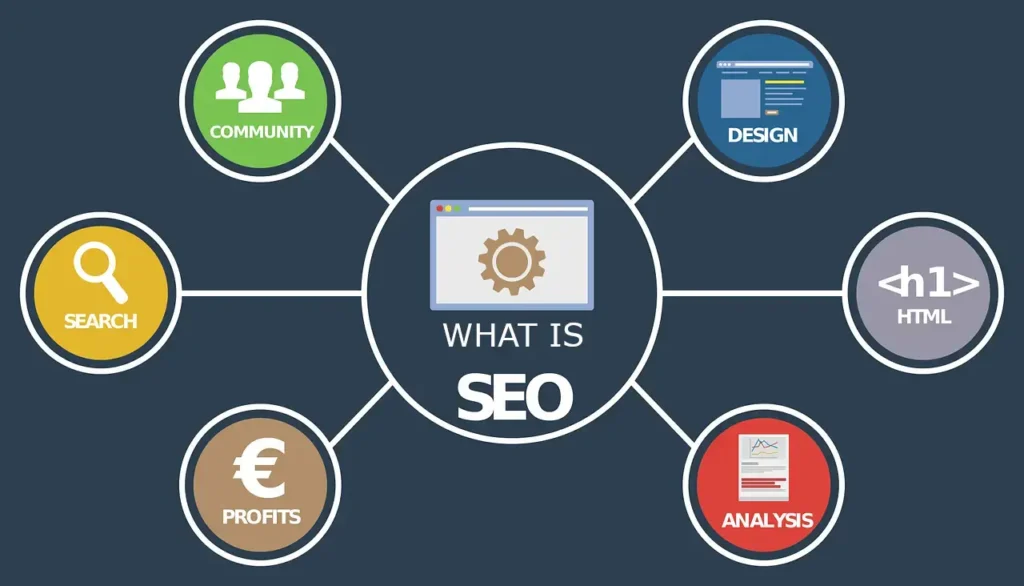
SEO (Search Engine Optimization) is the process of improving a website so that it appears higher in search engine results pages (SERPs) when users search for relevant keywords.
The primary goal of SEO is to increase organic (non-paid) traffic by making your website more useful, trustworthy, and relevant to both users and search engines like Google.
For example:
If someone searches for:
- Best digital marketing agency
- Website design company
- SEO services near me
A well-optimized website has a much better chance of appearing on the first page of search results.
Why is SEO Important?
Most online experiences begin with a search engine.
Studies consistently show that users click on results near the top of the first page far more often than those on later pages. If your website ranks higher, you receive more visibility, more visitors, and more opportunities to convert those visitors into customers.
SEO helps businesses:
- Increase website traffic
- Improve brand visibility
- Build trust and credibility
- Generate qualified leads
- Increase online sales
- Reduce advertising costs over time
- Achieve long-term business growth
How Do Search Engines Work?
Search engines like Google use automated systems to discover, understand, and rank web pages.
The basic process includes:
1. Crawling
Search engine bots scan websites and discover new pages through links and sitemaps.
2. Indexing
After crawling, search engines analyze the content and store it in their database (called the index).
3. Ranking
When someone performs a search, Google’s algorithms evaluate hundreds of ranking factors to determine which pages best answer the user’s query.
Types of SEO
1. On-Page SEO
On-page SEO focuses on optimizing elements within your website.
This includes:
- High-quality content
- Keyword optimization
- SEO-friendly URLs
- Proper heading structure
- Meta titles
- Meta descriptions
- Internal linking
- Image optimization
- Alt text
- User experience
Good on-page SEO helps search engines understand your content more effectively.
2. Off-Page SEO
Off-page SEO refers to actions taken outside your website to improve authority and rankings.
Examples include:
- Backlink building
- Guest posting
- Social media sharing
- Brand mentions
- Influencer collaborations
- Online PR
High-quality backlinks from reputable websites signal trust and authority to search engines.
3. Technical SEO
Technical SEO ensures that your website is easy for search engines to crawl and index.
Important technical SEO elements include:
- Fast loading speed
- Mobile responsiveness
- HTTPS security
- XML sitemap
- Robots.txt
- Structured data (Schema)
- Clean website architecture
- Fixing broken links
- Canonical tags
Technical SEO creates a strong foundation for better rankings.
4. Local SEO
Local SEO helps businesses appear in searches related to a specific geographic area.
Examples:
- Restaurant near me
- Best dentist in Delhi
- Website designer in Bhubaneswar
Local SEO includes:
- Google Business Profile optimization
- Local citations
- Customer reviews
- Local keywords
- Location pages
- NAP (Name, Address, Phone Number) consistency
What Are Keywords?
Keywords are the words and phrases people type into search engines.
Examples:
- SEO agency
- Digital marketing services
- Graphic designer
- Web development company
- Best logo designer
Choosing the right keywords helps connect your content with users searching for your services.
What is Keyword Research?
Keyword research identifies the terms your audience uses when searching online.
A good keyword strategy considers:
- Search volume
- Competition
- User intent
- Relevance
- Long-tail keywords
Example:
Broad keyword:
- SEO
Long-tail keyword:
- Best SEO company for small businesses
Long-tail keywords often have less competition and higher conversion potential.
Essential SEO Ranking Factors
Google considers many factors when ranking websites.
Some of the most important include:
High-Quality Content
Content should be original, informative, and valuable to readers.
Search Intent
Your content should answer the exact question users are asking.
Page Speed
Fast-loading websites provide a better user experience.
Mobile Friendliness
Most searches now happen on mobile devices, so responsive design is essential.
Backlinks
Quality backlinks from trusted websites improve authority.
User Experience (UX)
Easy navigation, clear design, and useful content encourage visitors to stay longer.
Secure Website (HTTPS)
HTTPS protects user data and is considered a positive ranking signal.
Benefits of SEO
SEO provides long-term advantages for businesses:
- Higher search engine rankings
- More website visitors
- Better brand credibility
- Increased lead generation
- Improved customer trust
- Higher return on investment
- Better user experience
- Sustainable business growth
Unlike paid advertising, SEO continues delivering value even after content is published.
Common SEO Mistakes
Many websites struggle because they make avoidable mistakes.
These include:
- Keyword stuffing
- Duplicate content
- Poor website speed
- Broken links
- Missing meta descriptions
- Thin or low-quality content
- Ignoring mobile optimization
- Poor internal linking
- Buying spammy backlinks
- Not updating old content
Avoiding these mistakes can significantly improve your website’s performance.
SEO Best Practices
Follow these proven SEO practices:
- Publish original, helpful content regularly.
- Optimize title tags and meta descriptions.
- Use headings (H1, H2, H3) properly.
- Compress images to improve speed.
- Include descriptive alt text for images.
- Build high-quality backlinks naturally.
- Improve Core Web Vitals.
- Keep your website secure with HTTPS.
- Update older content with fresh information.
- Monitor performance using analytics tools.
SEO vs Paid Advertising
| SEO | Paid Advertising |
|---|---|
| Organic traffic | Paid traffic |
| Long-term investment | Immediate results |
| Builds lasting authority | Stops when the budget ends |
| Higher trust among users | Marked as advertisements |
| Lower long-term acquisition cost | Ongoing spending required |
Many successful businesses combine SEO and paid advertising for the best results.
How Long Does SEO Take?
SEO is a long-term strategy.
While small improvements may appear within a few weeks, meaningful results often take 3 to 6 months, and competitive industries may require 6 to 12 months or more. Consistent optimization, quality content, and strong backlinks contribute to lasting success.
Who Needs SEO?
SEO benefits almost every type of business, including:
- Small businesses
- Startups
- E-commerce stores
- Local service providers
- Healthcare clinics
- Educational institutions
- Real estate agencies
- Restaurants
- Hotels
- Freelancers
- Digital marketing agencies
If your customers search online, SEO can help them find your business.
Future of SEO
SEO continues to evolve with advances in technology.
Key trends include:
- AI-assisted search experiences
- Voice search optimization
- Mobile-first indexing
- Helpful, people-first content
- Video SEO
- Visual search
- Structured data and rich results
- Faster, user-focused websites
Businesses that adapt to these trends will be better positioned for long-term success.
Conclusion
SEO is more than just ranking higher on Google—it’s about creating a website that delivers value, answers users’ questions, and provides an excellent experience.
By focusing on high-quality content, technical optimization, keyword research, and user satisfaction, businesses can increase organic traffic, build credibility, and achieve sustainable online growth.
Whether you’re launching a new website or improving an existing one, SEO remains one of the smartest long-term investments for digital success.
Need Professional SEO Services?
At BSmita, we help businesses improve their online visibility with:
- Website SEO Audits
- Keyword Research
- On-Page SEO
- Technical SEO
- Local SEO
- Content Optimization
- Link Building Strategies
- Monthly SEO Reporting
Ready to grow your website’s organic traffic? Contact BSmita today and let our SEO experts help your business rank higher on Google.